

Yesterday was surreal.
After an interview last week, we were featured on the BBC website homepage as part of a BBC InDepth piece – reaching millions – on loneliness among young adults.
Later in the evening I appeared on BBC Radio 4, speaking openly about my own experiences and what our organisation is doing to tackle a growing social issue that’s too often dismissed or misunderstood.
The article highlighted new ONS data:
33% of Britons aged 16–29 report feeling lonely “often, always, or some of the time” – the highest of any age group. By comparison, 17% of over-70s report the same.
Of course – for us, this wasn’t surprising.
We see it day in, day out as part of our project to address this issue on the ground, following the pandemic.
We also spotlighted similar data back in January through our #TheLonelyMillion campaign.
What is surprising is that society is finally listening and giving this issue a platform.
We’re gradually starting to see a shift in the loneliness conversation – one that doesn’t default to older people. That matters.
What is less surprising is the narrative of blame that continues to surface, witnessed in the comments.
You wouldn’t blame an older person for their loneliness. You wouldn’t suggest they’re over-reporting it. You wouldn’t tell them that they just need to be more resilient.
Yet young adults are routinely met with exactly that.
Awareness is progress – but awareness alone only gets you so far. What we need now is empathy.
We need to stop implying that young adults are at fault for their loneliness. This is the result of a huge range of factors, but to name a few:
– A historic lack of funding for spaces and interventions that support connection after education
– Policy failures that have failed to address the collapse of third spaces and the decline of faith and community institutions
– Weak regulation of social media and digital apps, purposefully engineered to be addictive, with impacts on the brain that researchers increasingly compare to substance addiction
– The wider consequences of the digital revolution on how we live, work, and socialise – one of the greatest civilisational shifts we’ve ever experienced
And this issue isn’t going away. AI is rapidly replacing social connection. Youth unemployment is rising. Communities are fragmenting. Trust in institutions is declining. Each of these compounds the problem and has wide-reaching impacts.
I’ll keep making the case. But this cannot sit solely with non-profits like ours.
We need funders, policymakers, employers, educators, and cultural leaders to treat loneliness as the structural issue it is – and reflect that in the cultures they build, the policies they set, and the systems they fund.
Because young people aren’t broken. The environment around them is. And it’s time society started to care.
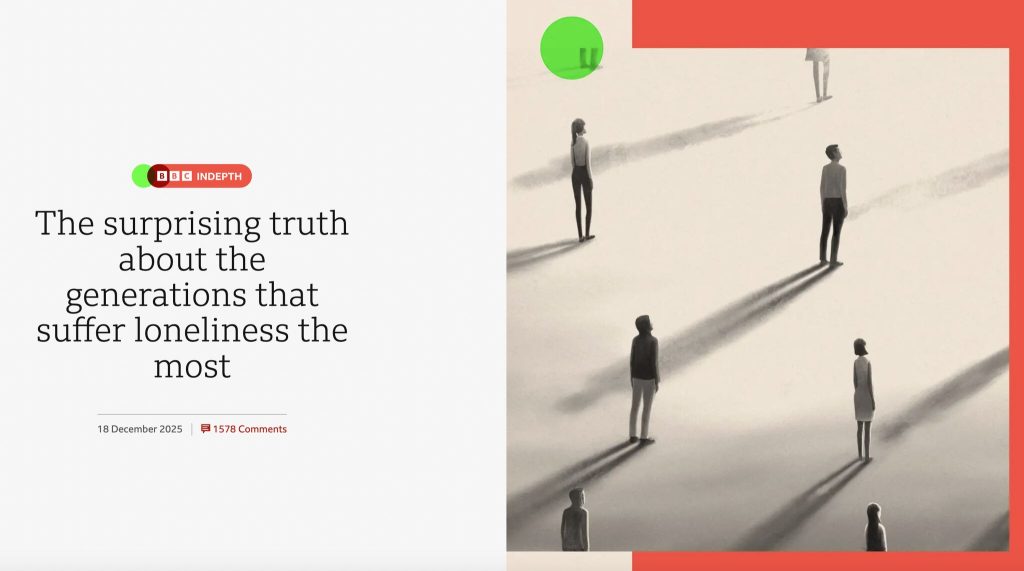
If you’d like to read the full feature and learn more about the experiences of young adults facing loneliness across the UK, you can find the BBC article below.
