
Over the past year, we have been part of a coalition of charities, researchers, policymakers and people with lived experience working to develop a shared vision for tackling loneliness in the UK.
Drawing on the latest evidence, frontline experience and insights from communities across the country, the group came together around a simple belief: while awareness of loneliness has grown significantly in recent years, meaningful action has not kept pace with the scale of the challenge.
The result is a new cross-government Call to Action – a document urging policymakers to place social connection at the heart of decision-making and recognise loneliness as an issue that affects everything from health and wellbeing to employment, education, community cohesion and economic participation.
The Call to Action sets out five key recommendations designed to embed loneliness prevention more deeply across government policy and public services, including:
- Recognise social health as a core pillar of health and embed loneliness prevention across healthcare.
- Build connected communities through better-designed housing, public spaces and local leadership.
- Boost productivity and employment by addressing loneliness in workplaces and employment support.
- Protect the next generation by tackling digital harms and using technology to strengthen connection.
- Help address the stigma of loneliness through education and coordinated national awareness campaigns.
This culminated in an invitation to Number 10 Downing Street as part of The Great Get Together, organised by the Prime Minister’s team and the Jo Cox Foundation.
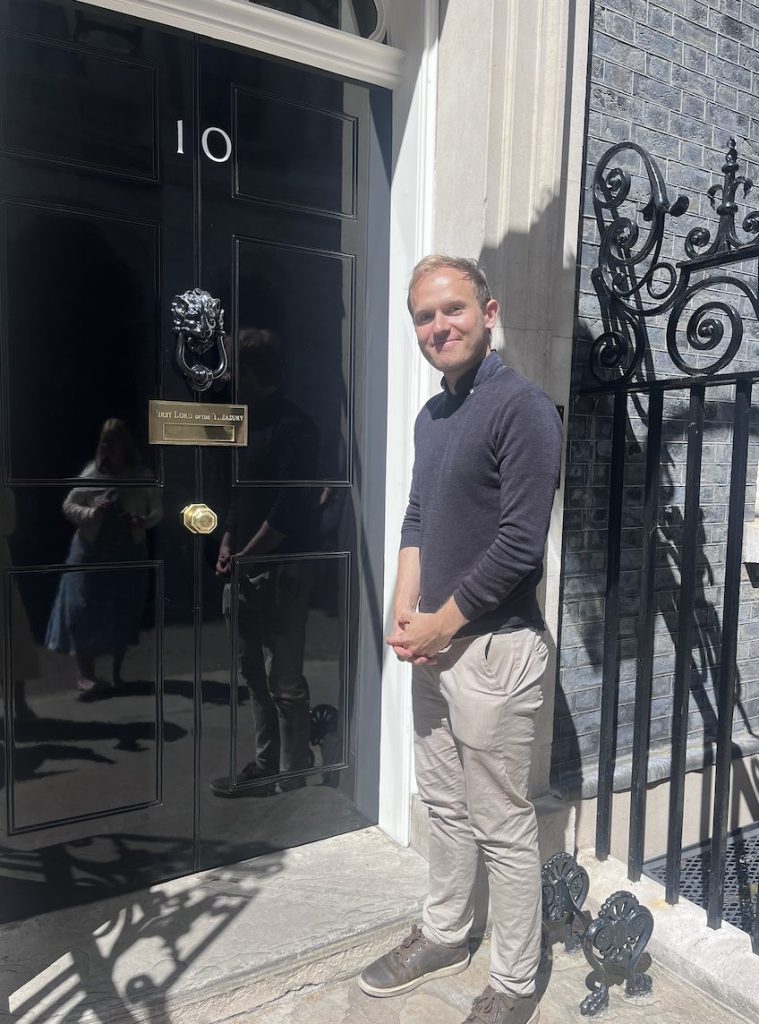
For me, this was a real landmark moment.
Back in 2021, after two years of social disruption, social distancing and remote working, I experienced the most challenging period of loneliness in my life.
The pandemic had devastated my support network, leaving me feeling disconnected from many of the people who had once been central to my life.
What people don’t often talk about is the toll loneliness takes on you over time. It drains your mood. It chips away at your confidence. It makes you question your place in the world.
As I tried to rebuild, it felt like the world around me had changed too. Communities and third spaces had disappeared. More of our lives had moved online. The spontaneous interactions that once brought people together felt increasingly rare.
At the time, I thought I was facing a personal challenge.
What I later realised was that millions of others were experiencing exactly the same thing.
Through leading The Great Friendship Project, I’ve had the privilege of meeting thousands of those young people through our community.
I’ve heard stories from people who have moved to a new city, lost touch with friends, experienced relationship breakdowns, struggled with confidence, worked remotely, or simply found it difficult to build meaningful connections in an increasingly disconnected world.
The comforting part was realising I wasn’t alone in my experience. The sobering part was realising just how many other people were facing the same challenge. That is why this work matters so much to me.
Because I’ve not only experienced the human cost of loneliness – I see it every day first-hand too.
I’ve often meet young people whose worlds have quietly shrunk, who feel disconnected despite being surrounded by others. Individuals who desperately want friendship, community and belonging but don’t know where to find it.
And I know that this cannot continue.
Loneliness has become one of the defining social challenges of our generation.
Once viewed primarily as an issue affecting older adults, loneliness is now increasingly affecting younger generations.
The World Health Organization has formally recognised loneliness and social isolation as global public health priorities, while evidence continues to highlight the profound impact social disconnection has on our health, wellbeing, productivity and communities.
The challenge extends far beyond individual wellbeing.
Loneliness is linked to poorer physical and mental health outcomes. It places pressure on public services. It affects educational attainment, employment and economic participation. It weakens community cohesion and, in some cases, can leave people feeling excluded from the society around them.
Yet despite growing awareness, action has not kept pace with the scale of the challenge.
The UK was once a global leader in this space. The work of Jo Cox and the Jo Cox Commission on Loneliness helped place loneliness firmly on the national agenda and ultimately led to the creation of the world’s first loneliness strategy.
But today, young adults in the UK experience some of the highest rates of loneliness in Europe.
Ten years on from the murder of Jo Cox MP, I believe now is the time for renewed ambition and a refreshed national focus on connection.
We need more than awareness. We need real, lasting and meaningful policy change.
That is why this new Call to Action urges government to adopt a renewed cross-government approach to loneliness and social connection.
These recommendations reflect a simple truth. Loneliness is not simply a personal issue.
It is shaped by the communities we live in, the places we spend our time, the opportunities available to us and the systems that surround us.
If we want to create a more connected society, we need communities, businesses, charities, public services and government all pulling in the same direction.
That is why I am proud to stand alongside partners from across the sector in calling on government to make loneliness prevention and social connection a national priority.
The time for action is now.
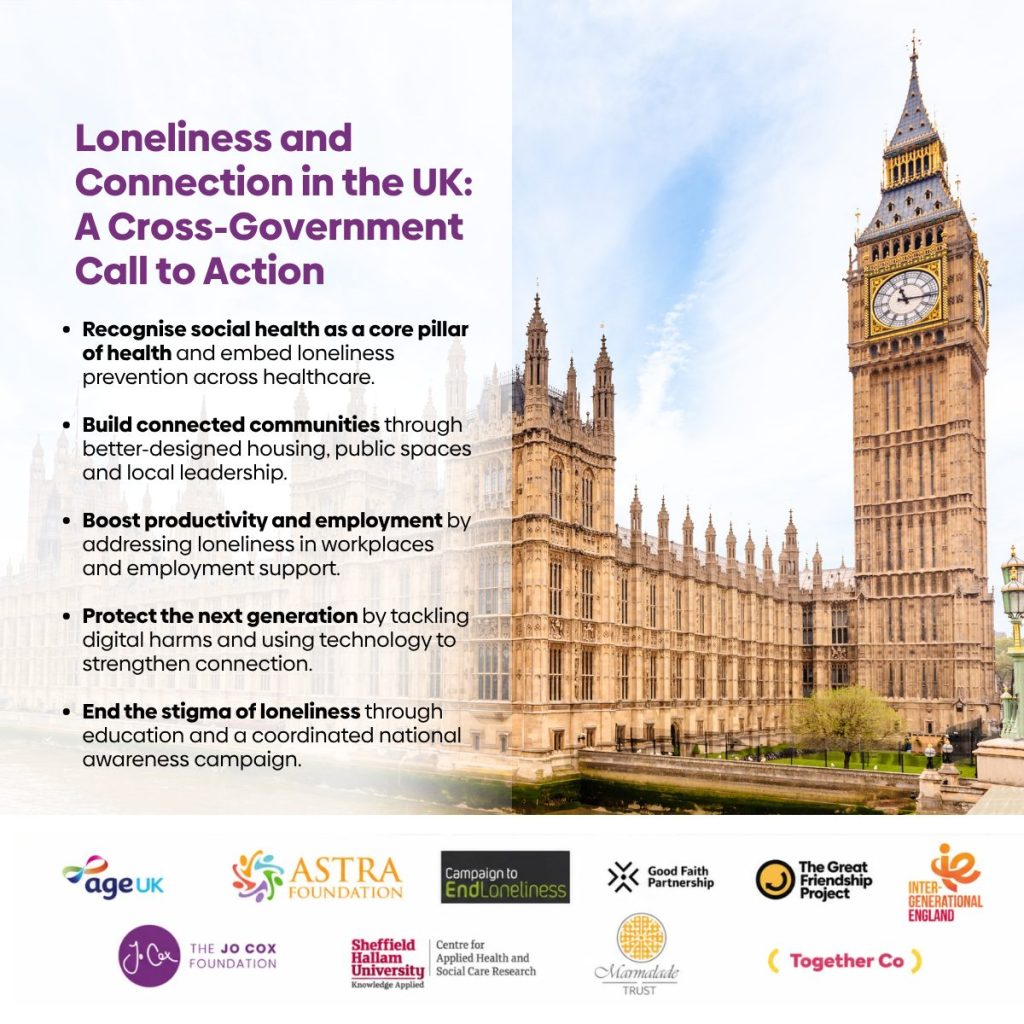
If you’d like to learn more about the changes we’re calling for, you can read the full cross-government call to action below.
